In the absence of knowledge comes ‘this is how I got it to work.” People and groups will fill in gaps in knowledge. If you either don’t train people, or your product leaves areas of ambiguity, then people will take the easiest path forward – they’ll either give up, or, they’ll find a workaround that gets them what they need. And one day you’ll find these and be completely baffled as to how they came into existence.
Sit with your teams, see what they do, better yet, do it yourself. I’ve done this with every team I’ve worked with for products and I’ve found that issues going back to a customer for resolution had actually already been solved. But the solution was buried deep in a menu structure that had been forgotten about over time. If your teams are customer facing, sit with them for a day, see what you learn.

 “Somewhere there is a bridge engineer asking why any of you would drive over a bridge like you are.” I usually get a “WTF are you talking about?” look or response. The software engineers are pretty confused and I respond with “That’s the same look our end-users give us when we speak to them like that. Somewhere there’s a bridge engineer asking why there would be so many stationary, overloaded trucks on the bridge, and why someone would be so close to them, the bridge wasn’t designed with that in mind.” There are thousands of calculations dealing with compression, harmonics, wind, temperature, etc., do you as software engineers truly understand the bridge you’re driving on or do you just want to “use it” to get where you’re going? It’s the latter, get where you’re going. That’s the same for end-users – they don’t want to, nor should they have to, consider how the software was built in order to use it. SPAs are a prime example of this. Hitting the back button wipes a large portion of your selections yet it’s not obvious that a site is build as a single page. Software engineers ask “why would anyone do that” and end-users ask “why would anyone build it that way”. It happens all the time where software engineers are trying to explain to end-users why they shouldn’t hit the back button and it’s a prime example of engineering-glish.
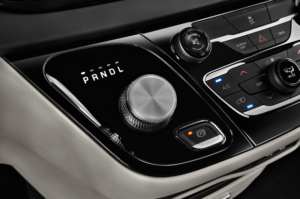 Your favorite song comes on the radio while you’re driving. You know the one. The one single song in all of music that makes everything seem ok. You reach down and crank it up. And to your surprise, your transmission is 200 feet behind you. This is one example of the Frustration & Astonishment Factor. Actions we take every day that, in one, and only one example, create untold destruction.